
Cranford City Directory Holdings by Year
The strongest confirmed historical directory source is the Cranford Public Library local-history collection and its linked digital archive. The library identifies a Cranford directory run from 1901 through 1982. Cranford DigiFind-It organizes the scans under City Directories and makes the collection a useful first stop for name, address, business, and institution searches. The stated run does not prove that every annual issue survives, so record the volume year and confirm a missing year before treating it as a gap in a household's history.
| Collection | Years | Where Held | Access |
|---|---|---|---|
| Cranford city directories | 1901 to 1982 | Cranford Public Library and Cranford Archive | Digitized collection; annual completeness needs confirmation. |
| Polk regional directory | 1941 | DigiFind-It PDF | Alphabetical, household, street-guide, and business sections. |
| Local newspapers | 1894 to 2005 | Cranford Archive | Full-text, keyword-searchable archive. |
| Burditt newspaper index | 1893 to 1949 by title | Library and Cranford Archive | Name-index route with the password “Burditt.” |
| Cranford High School yearbooks | 1922 to 2008; archive landing page says 2009 | DigiFind-It | School-year identity clues; verify the last scanned volume. |
The library is an access channel in its own right. Its local-history resource page also identifies the Cranford NJ Name Index compiled by Robert J. Fridlington and Rotary Club biographies from 1923 to 1969. Those collections can supply a spelling, organization, or school-year clue that makes an earlier directory search more precise. Note: an official library source did not confirm a separate reverse-directory shelf or a complete run of every printed volume.
Cranford City Directory Run, 1901 to 1982
Directory entries serve best as time-stamped leads. A person may appear under initials, a married surname, a business name, or a household heading. Start with the spelling printed in a known issue, then search nearby years for a move, an occupation change, or the first and last appearance. A household can disappear because it moved, changed names, died, was omitted, or falls in an unavailable volume. The original page, not a modern transcription, should settle punctuation and abbreviations.
- 1893: Burditt indexing begins with the Cranford Chronicle.
- 1894: the verified local newspaper archive begins its scan and full-text span.
- 1901: the documented Cranford city-directory run begins.
- 1941: the regional R.L. Polk Westfield and Cranford directory supplies a concrete sample.
- 1982: the locally stated city-directory run ends; the research does not establish why or whether every annual volume survives.
Use the chronology to select a source that fits the period, then keep the original issue and page reference with every transcription.
- Choose a starting year from a known address, school record, newspaper mention, or family document.
- Find the surname in the alphabetical directory and transcribe the entry as printed.
- Check the street and avenue guide for the same address, preserving the regional place label.
- Move forward and backward through available years, noting only documented changes.
- Test a change with a census, deed, obituary, or newspaper result before drawing a family conclusion.
The county's older land trail and Cranford's directory span overlap imperfectly. Union County holdings reach further back than the municipal directory run, while the printed listings provide household context that a deed does not. Keeping a simple chronology with a source, issue date, exact name, address, and page reference prevents a later inference from replacing what the record actually says.
Cranford City Directory and 1941 Polk
The 1941 sample is titled Polk’s Westfield and Cranford (Union County, N.J.) Directory 1941. R.L. Polk & Co. published it from New York, and the volume says it was compiled through a door-to-door canvass and sold by subscription. It is not a Cranford-only directory. Westfield, Mountainside, Garwood, and Kenilworth appear with Cranford, so a place label and the street guide matter before attaching an entry to a Cranford person or location.
The volume's stated components form a useful sample-entry inventory:
- An alphabetical directory of business concerns and private citizens.
- Householder and occupant material tied to street addresses.
- A complete street and avenue guide for an address-first check.
- Miscellaneous information and a buyers' guide or classified business section.
- A regional place context that must be retained in research notes.
The scanned 1941 title and contents are available through the digitized Polk directory. Its structure supports a surname-to-address search and an address-to-occupant check, but a printed listing cannot establish legal ownership, a relationship, or continued residence after that edition.
Reading Cranford City Directory Entries
Read each entry as a bundle of indexed clues rather than a completed biography. The confirmed 1941 sections support an inventory of name, household or occupant line, street number, occupation or business classification where supplied, and the related street-guide or classified listing. The accessible source did not expose a complete extraction of a single household line or the publisher's abbreviation key. Do not add a spouse, owner mark, or meaning for a symbol unless it appears on that scanned page and in its own key.
| Name as printed | Record the surname, given name, and initials without expanding them. |
|---|---|
| Household or occupant line | Connects a printed person or household reference to an address when supplied. |
| Street and number | Cross-check it in the complete street and avenue guide. |
| Occupation or classification | Use only where the directory supplies one; it may distinguish same-name entries. |
| Business or institution entry | May appear separately in the alphabetical or classified material. |
| Regional place label | Essential in the 1941 volume because several nearby municipalities share the book. |
- Street and avenue guide
- The address-ordered part of the verified 1941 Polk volume. It is the confirmed historical route from a street number to a listed occupant or business.
- Householder or occupant listing
- A directory entry that associates a household head or occupant with an address. It is not, by itself, a deed or proof of ownership.
- Abbreviation key
- A publisher's explanation of shortened terms and symbols. Consult the key in the same volume before interpreting a mark.
Tracing Cranford City Directory Households
A directory-by-directory trail is most useful when paired with released census records and a second local source. Federal census schedules cited by the State Archives are available from 1840 through 1950 under the release rule, and New Jersey state censuses run from 1855 through 1915. Census entries can add household context, while the Cranford city directory narrows the interval between those snapshots. Match the address, names, and time frame carefully because the census geography or directory label may not mirror a modern map.
- Locate a household in one dated directory and note the exact address and spelling.
- Search adjacent available directory years for the first appearance, move, or disappearance.
- Pair a compatible directory year with a released federal or New Jersey census schedule.
- Use the street guide to distinguish a same-name person at another address.
- Compare a newspaper, obituary, deed, or probate record before calling two entries the same person.
The New Jersey State Archives adds census, vital, divorce, naturalization, military, county, and microfilm holdings to that process. The archive's long time range helps when a directory clue points outside Cranford, but it does not remove the need to distinguish an occupant from an owner.
Cranford Newspapers for Directory Checks
Newspapers help explain a directory change without turning a name match into identity proof. Cranford's digitized newspaper archive covers 1894 through 2005, and the library routes Chronicle material from June 2005 to the present through America’s News. Search a surname, initials, business, or address around a directory year for civic notices, public events, property references, marriage announcements, or obituaries. A hit is a lead that should be compared with the address and date already documented.
The Burditt index is especially local. Its Chronicle coverage begins Nov. 29, 1893, the Citizen begins Mar. 5, 1898, and the combined Citizen and Chronicle listing begins Feb. 17, 1921 and runs to May 26, 1949. The newspaper title changed after May 13, 1937. Search title variants instead of assuming one name covers the entire run, and use the supplied password, “Burditt,” where the index requests it.
Archive check. A directory entry and a newspaper notice can share a name without describing the same person. Compare the date, street, initials, and surrounding family or business details before joining them.
Cranford Sanborn Maps and City Directories
Sanborn fire-insurance maps supply the physical layer beside an old directory entry. The Cranford Historical Society guide identifies online Cranford editions for 1893, 1898, 1903, 1908, 1915, and 1922. It also identifies later 1929, 1949, and 1959 editions, while noting that those later editions were not online in the local guide. Map evidence can show a building footprint, use, materials, or a visible change. It cannot establish who owned or occupied the building.
The Cranford Historical Society Sanborn guide gives a concrete example at 208 Holly Street: the 1903, 1908, and 1915 maps show a half porch, while the 1922 edition shows an extended porch. That sequence is evidence about the structure, not a list of residents. Use the map year, address, and surrounding streets with a directory year or deed reference.
For broader map searching, the Library of Congress Sanborn collection provides state, city, date, edition, sheet, notes, and digital-file search controls. Note: the research did not confirm a Cranford street renumbering list, so legal descriptions, map years, cross streets, and adjacent parcels are safer bridges when an older address looks different.
Cranford Historical Directory Repositories
Several local collections add context without becoming a substitute for the directories. Cranford High School yearbooks can help verify a class year, photograph, club, or graduation period. Rotary biographies from 1923 to 1969 may identify public-facing civic roles. The Union County Historical Society, incorporated in 1869 to preserve books, records, manuscripts, and relics, maintains an archive-search and contact route at the Dr. Carl Hanson House in Cranford. Its accessible materials do not confirm specific Cranford family files or a public finding aid, so request collection information by name and date range.
Explore the archival landing page through the Union County Historical Society before contacting it about a documented person or address. The historical record trail also reflects Cranford's geography around the Rahway River, rail connection, and development corridors such as Springfield, Union, Alden, and Holly. Those local anchors can help interpret an old street reference, but neighborhood names should be checked against a dated map rather than assumed from a modern label.
A view of the Cranford DigiFind-It archive shows the local categories for City Directories, Newspapers, Town Resources, and Yearbooks.
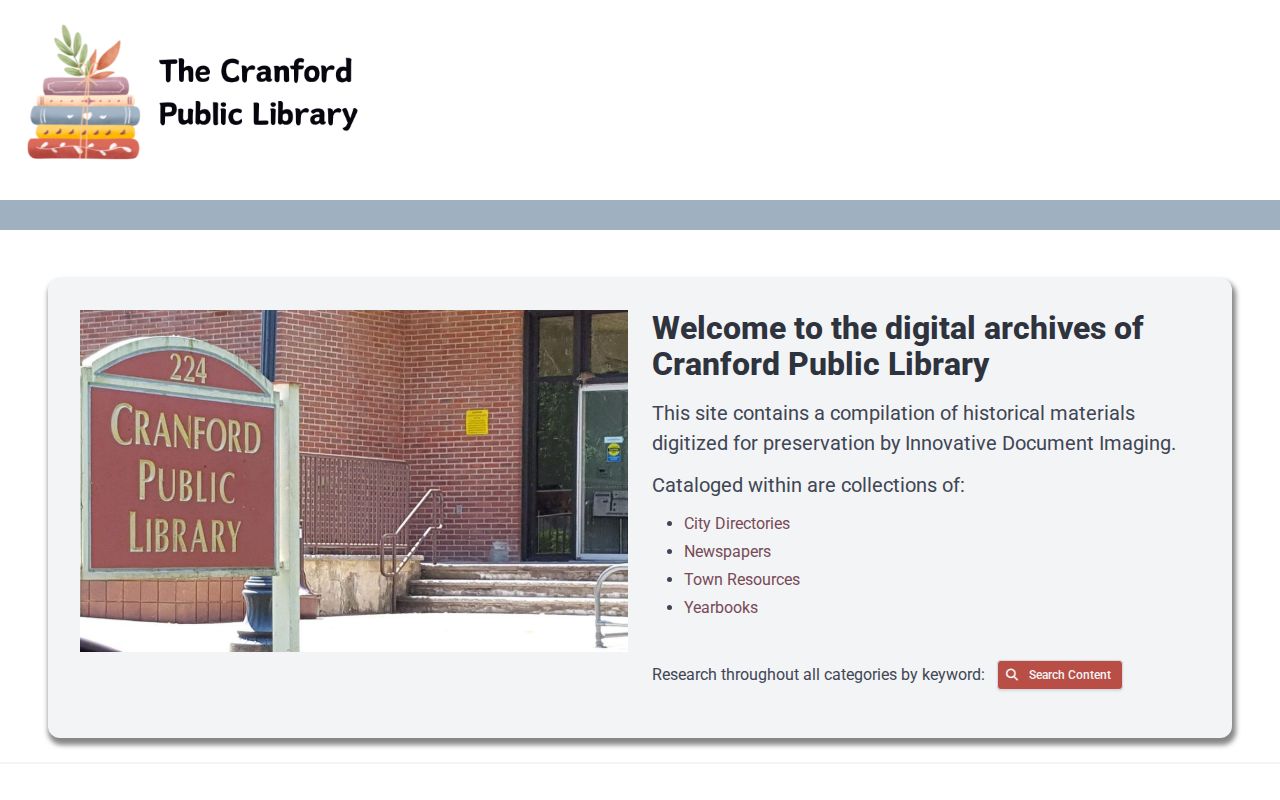
Those categories support a focused search across dated local material while keeping every result tied to its original collection.
The Union County Historical Society archive-search route is another confirmed historical channel for Cranford records and manuscripts.
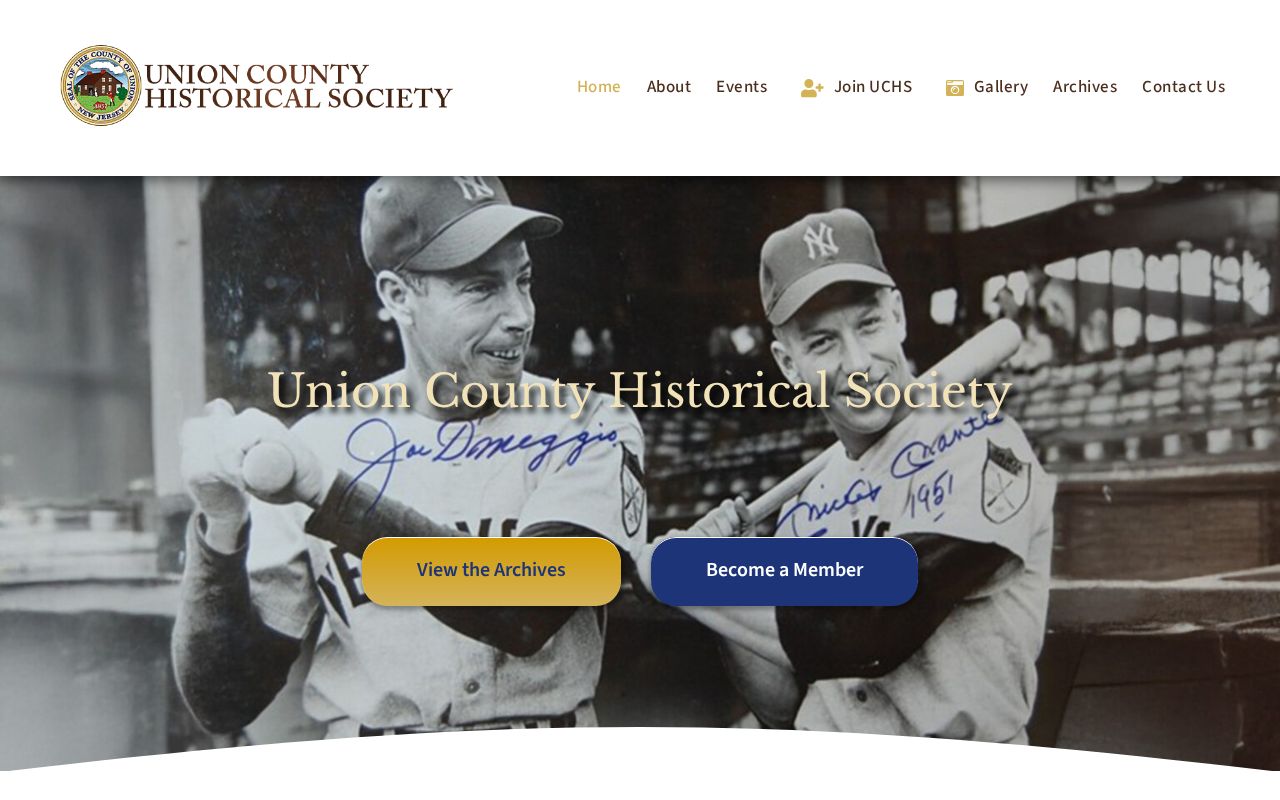
Use its contact route to ask whether a named manuscript, map, or record group can corroborate a dated directory finding.