
Cranford Resident Lookup Coverage
Each record below confirms a limited part of a person’s public record trail. The strongest Cranford resident lookup uses independent sources, dates each result, and records what the source actually says. The state property file is useful for a parcel and owner context, but an owner is not automatically the present occupant. Likewise, a court name hit is a party reference, not a current-address finding. For a historical connection, the library archive can supply an earlier household or school-era lead that still needs a second record.
| Record | What It Confirms | Where | Access |
|---|---|---|---|
| Property data | Parcel owner, situs, block and lot, assessment context | Cranford Township Assessor plus NJ YourMoney Property Explorer | Public state data, with annual-file timing |
| Recorded land instrument | Party role, transfer date, legal description, instrument or book and page | Union County Clerk Official Land Records / UCPA | Web index from 1977, Record Room for older work |
| Voter record or list | Statutory public registration fields, subject to protections | NJ Voter Registration Status / Voter Information Portal | Exact matching and election-law limits apply |
| Court index | Party name, venue, docket, caption, and case-date context where public | Cranford Municipal Court and NJ Courts public case search | Index and file access vary by case and rule |
| Vital or probate record | Event or estate relationship evidence | Cranford Vital Statistics, NJ DOH, or Union County Surrogate | Eligibility, record age, and copy rules apply |
When the starting fact is an address, note whether it is a parcel’s situs, the physical location, or a tax mailing address. A mailing address can belong to an owner, business, representative, or other correspondence recipient. It is a lead, not a statement that the person lives at the parcel. When the starting fact is a name, begin with a name plus a second anchor such as a middle initial, former address, date, spouse, organization, or block and lot.
Anchor a Cranford Resident Record
NJ YourMoney Property Explorer publishes owner and location information, block and lot, assessed land and building values, prior taxes, and property classification. Cranford’s Assessor determines value locally, but the municipal page did not expose a public owner-name form. That makes the state explorer the confirmed web route for a parcel lookup, with the Cranford Assessor available for questions about local assessment records.
Copy the displayed data year with the block and lot. The file may not reflect changes made after its January data point until a later update. If a parcel needs a deed check, the Clerk’s UCPA site offers Name Search, Date Range Search, Book / Page Search, and Instrument Number Search. Its online record range begins June 1, 1977. The Union County Clerk Record Room says county land transactions can be researched from 1857 to the present, making the counter route important for older or not-yet-imaged documents.
Cranford Court Party Search Details
The New Jersey public Case Jacket guide documents the public search choices more clearly than the live text capture. It shows tabs for Docket Number, Party Name, and Judgment. In its individual-party example, last name and first name are required, middle initial is optional, and the results can be refined by county, name, or date. Names of three characters or more broaden matching, so a result should be narrowed with another identifier.
| Result item | What it tells you |
|---|---|
| Name | The indexed party name, which may use a spelling or initial variant. |
| Venue | The county label for the result. |
| Docket number | The case identifier that opens the Case Jacket when public access permits. |
| Case caption | The names or labels used for the case, not a residence statement. |
| Case initiation date | When that case began, useful for sorting same-name results. |
Cranford Municipal Court routes ticket and complaint users to NJMCDirect. Its local jurisdiction is different from the statewide party-search categories, and the local route is not a general resident-name directory. Open, closed, restricted, municipal, and archived records can have different channels. The Courts request form allows plain, certified, and exemplified copy choices, and identifies JEDS, court division, or the Superior Court Clerk’s Office as appropriate routes depending on the file.
Verify a Cranford Resident in Sequence
Use a verification ladder rather than trying to make one search prove everything. A name, a property result, and a court result may each be accurate but refer to different people. Keep the source date, spelling, and record type beside each finding. A non-match may mean the name was entered differently, the record is restricted, the source is incomplete, or the person was never indexed there. It does not establish absence from Cranford.
- Start with a full name plus a second detail, such as a street, block and lot, middle initial, approximate date, or organization.
- Use property data only to establish parcel, owner, situs, mailing-address clue, and data year. Keep those labels separate.
- Try the voter route with the county-provided spelling and the matching city, county, and date-of-birth information. Check hyphens, spaces, former surnames, initials, and nicknames.
- Run the party search with name variants and county refinements. Read the docket, caption, venue, and date rather than relying on a name alone.
- Confirm an important relationship or event through the appropriate deed, vital, probate, or archival source, then ask the custodian for the right copy route.
- Docket
- A court’s identifier for a case. It directs a requester to a case record, not to a person’s complete profile.
- Index and image
- An index lists searchable record details. An image is the scanned document itself, which may be unavailable online or have separate access rules.
- Certified copy
- A copy issued by the custodian with its certification. It differs from a plain view or ordinary image and can require a fee or eligibility.
For earlier household context, Cranford’s digitized directories, newspapers, yearbooks, and name indexes are useful supporting sources. The Cranford city directory collections supply dated household and address leads, not proof of present residence or legal ownership.
Cranford Voter Results Need Exact Matching
New Jersey’s registration guidance says that hyphens and spaces, a marriage surname, a middle initial, or a nickname can prevent a match when the county’s version of a name differs. A successful lookup confirms spelling, date of birth, city or county, and a Voter ID for account use. The live form fields could not be inspected in the research capture, so a person should verify the current screen directly instead of assuming a field or result that was not visible.
New Jersey voter-list law identifies public list elements including name, address, date of birth, party affiliation, and voting history, with protected-person treatment. It does not reveal ballot choices. A voter may obtain a printed election-district list for $0.25, while an electronic county copy from the commissioner may cost up to $375 for reproduction. The statute bars commercial or charitable solicitation, and protected addresses are excluded. Neither a result nor a requested list is a household roster.
Note: The voter information route verifies registered-voter information only and cannot establish every person who lives at a Cranford address.
Cranford Vital Records Have Limits
Cranford Vital Statistics issues certified birth, death, and marriage certificates for events that occurred in Cranford. The local page lists eligible relationships, government photo identification, appointments generally Monday through Friday from 9:15 to 3, and a $10 per-copy local fee. A recent certificate is not an open online name index. Requests go to the municipality where the event occurred, or to the state route when appropriate.
New Jersey Department of Health guidance treats births over 80 years, marriages over 50 years, and deaths over 40 years as genealogy thresholds. The REG-28a genealogy form is mail-only and uses reason, identity, payment, and event-specific fields. For more recent records, the REG-27a form requires the applicable relationship or interest, ID, and application details. State fees listed in the research are $25 for an initial search/copy or certification and $2 for an additional copy of the same record, while local fees may differ.
Cranford Resident Lookup by Purpose
Some questions need a specialized route. For an heir, search the Union County Surrogate using the decedent’s name and approximate death date, then compare estate information with a recorded deed or obituary. The Surrogate offers appointments and an in-person kiosk for plain copies; its research says a staff estate search costs $10 and kiosk copies cost $0.25 per page. Estate records can identify an executor, heirs, and a chronology, but they are not a general directory of living residents.
For an adoptee or birth-parent question, use the NJ CP&P Adoption Registry and the state’s Birthright Act information. The registry provides registration, non-identifying background, limited searches, and mutual-consent handling for covered adoptions. Identifying information is released only when statutory consent conditions are met. For a former classmate, Cranford yearbooks from 1922 through 2008 or 2009, newspapers, and the library name index are better historical leads. Graduation year and a caption or photograph should support any match.
For a business or credential lead, use the record for its stated purpose. A business filing can show an entity or registered-agent address, and a commission result can show authorization, but neither proves a person’s home address. Those distinctions keep a resident lookup tied to the record’s actual meaning.
Cranford Records Request Options
When a public index lacks the needed file, choose the custodian that holds the record. The Clerk handles deeds and index questions, the court clerk handles court material, the registrar or Department of Health handles vital requests, and the Surrogate handles estate-file copies. For municipal material not posted online, use the New Jersey Open Public Records Act (OPRA), N.J.S.A. 47:1A-1 et seq. through the Township Clerk’s documented request channel.
OPRA opens government records unless an exemption or another law applies. It does not override court rules, vital-record restrictions, voter statutes, the Driver’s Privacy Protection Act, Daniel’s Law, or other confidentiality rules. Describe a specific record or category, the relevant person or address, and a date range. A request for every record about someone is overbroad and can be denied, redacted, or directed to another office. The Government Records Council says there is no fee when a custodian merely directs a requester to an online government record.
Public Safety Results Are Narrow
The New Jersey State Police registry is a public-safety resource with its own legal-use warning. It is not a Cranford resident roster and should never be treated as a way to identify ordinary neighbors, relatives, or classmates.
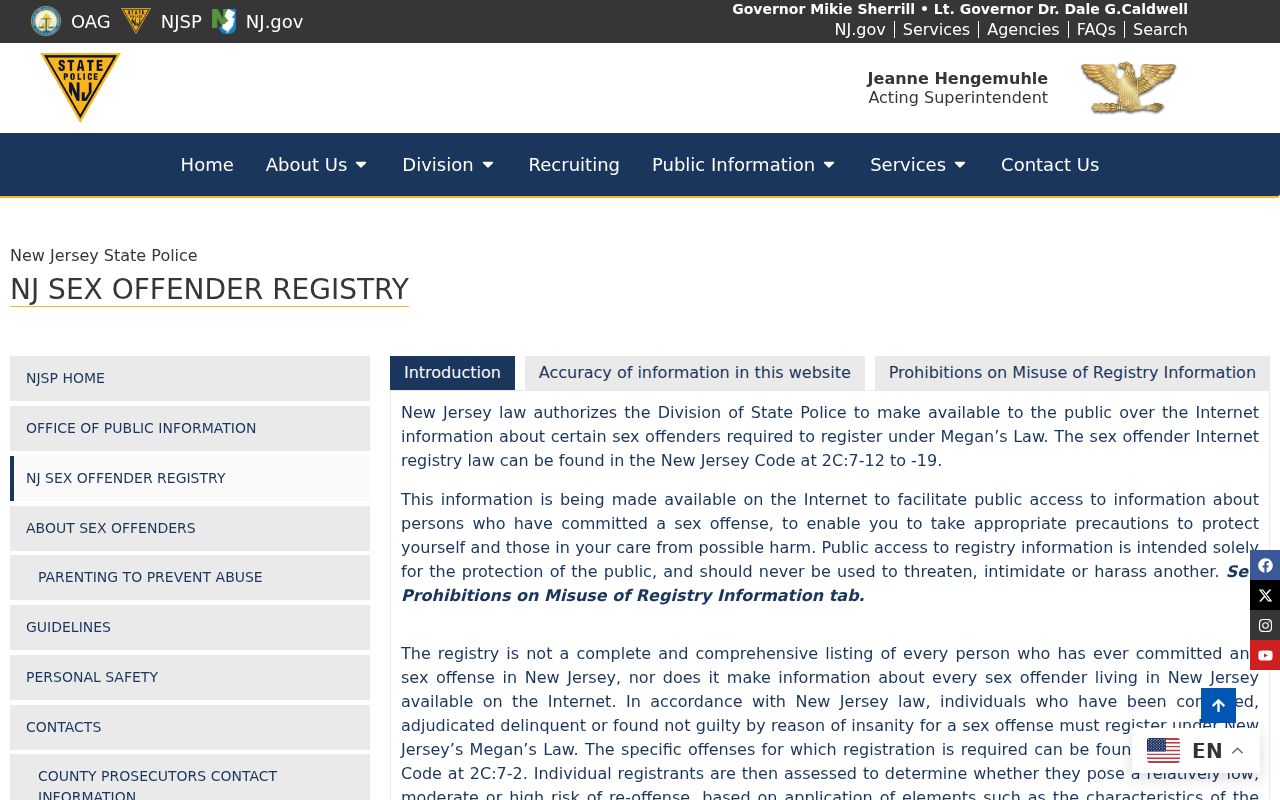
Registry information is for public protection. New Jersey guidance warns that threats, intimidation, harassment, or use of registry information to commit a crime can have criminal consequences.
The Union County Corrections page provides a separate inmate-lookup route and corrections contacts. Its subject and update limitations matter: custody information is not a general current-resident record and should not be generalized beyond the specific official result.
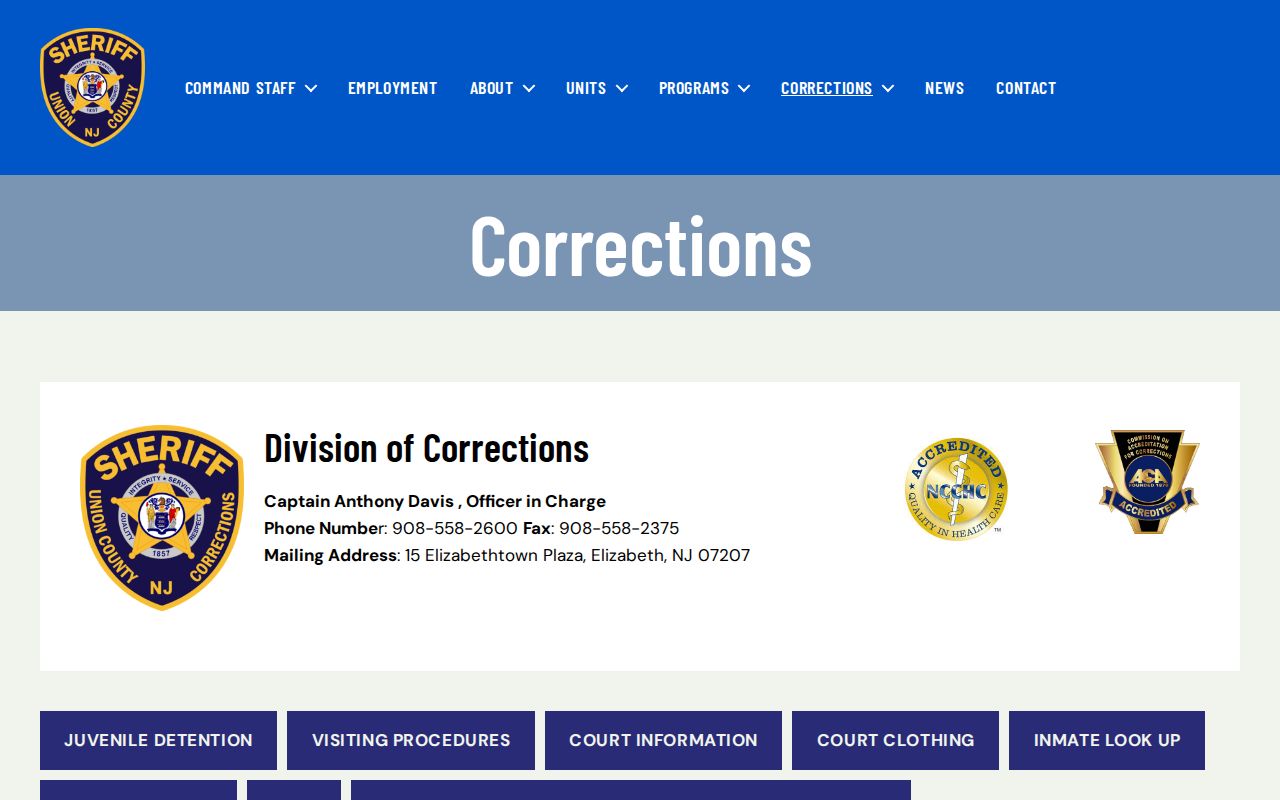
A corrections result can be incomplete, time-sensitive, or tied to a facility rather than a Cranford residence. Use the official disclaimer and the named agency for current information.
Cranford Credential Results Need Context
The New Jersey notary search supports last-name, city, ZIP Code, and Commission ID searches, with active status, location, and valid-through information. It is a state commission lookup, not a resident-address search.
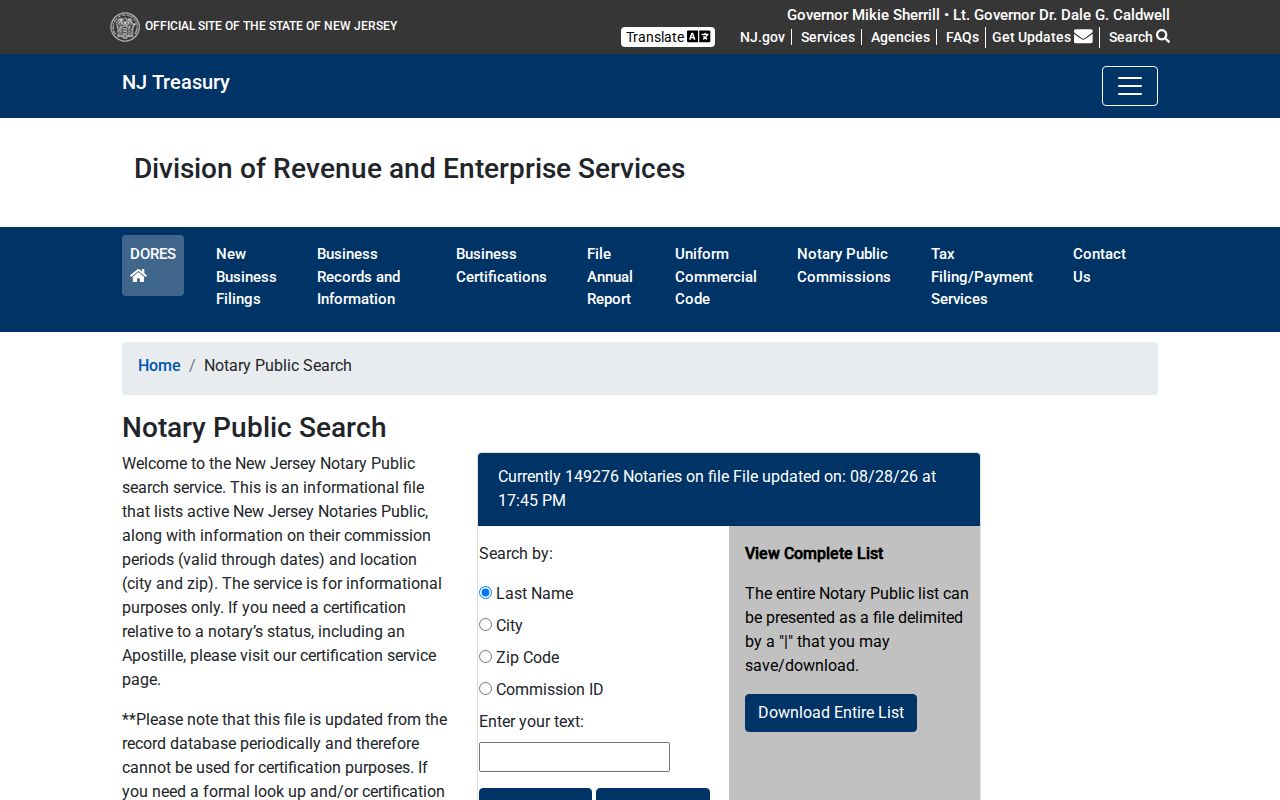
A commission result can corroborate an authorization or public professional connection. It cannot confirm where someone lives each day, and it should be paired with an appropriate property, court, or vital source only when the records concern the same person.
Cranford Resident Lookup Legal Limits
Protected or missing information can be intentional. New Jersey’s Address Confidentiality Program supplies a legal substitute address for eligible participants. Daniel’s Law also requires government entities to avoid posting protected public-servant addresses. Courts and agencies may restrict juvenile, sealed, expunged, adoption, victim, and other protected information. Contact the original custodian to correct a specific field rather than expecting another database to amend it.